
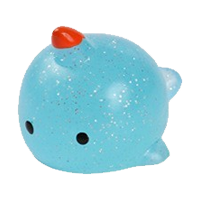

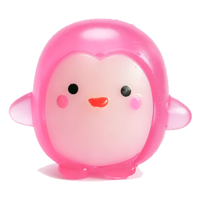

Playgoro's 2024-2030 Industry Research and Trend Analysis Report on TPR Relaxation Squeezing Fun Toys
Playgoro's 2024-2030 Industry Research and Trend Analysis Report on TPR Relaxation Squeezing Fun Toys
I. Industry Overview and Market Status
Relaxation squeezing fun toys, which provide tactile feedback through kneading and squeezing, have become an important sector in the field of emotional consumption. Among them, TPR (thermoplastic rubber) material, due to its easy molding, quick rebound, and low cost, has dominated the mid-to-low-end market.
• Market Size: The global relaxation toy market is continuously growing, with the scale expected to reach approximately 10 billion US dollars in 2024 and 15 billion US dollars by 2028. The Chinese market is expected to reach 12 billion yuan in 2027.
• Core Driving Forces: The pressure brought by the fast-paced life, especially in the workplace and education, is the main driver. The 15-35-year-old young group is the main consumer (accounting for over 75%), and the proportion of female users is over 60%.
• Channel Characteristics: E-commerce and social e-commerce (Douyin, Xiaohongshu) are the core battlegrounds, accounting for over 80%. Live-streaming sales have greatly promoted the rapid penetration of products through "visual + auditory" dual stimulation.
Competitive Dimension | Current Description |
| International Brands | Such as Japan's AMOS, South Korea's Squishyland, Playgoro, which mainly target the high-end market and focus on material craftsmanship. |
| | Through live-streaming sales and cost-effective strategies, they are seizing the mass market. The main production areas are concentrated in Hebei Xiongan, Zhejiang Yiwu, Playgoro in Guangdong Shantou. |
| Handicraft Workshops | Meeting customized and niche demands, but limited by production capacity and innovation ability. |
Playgoro's 2024-2030 Industry Research and Trend Analysis Report on TPR Relaxation Squeezing Fun Toys
I. Industry Overview and Market Status
Relaxation squeezing fun toys, which provide tactile feedback through kneading and squeezing, have become an important sector in the field of emotional consumption. Among them, TPR (thermoplastic rubber) material, due to its easy molding, quick rebound, and low cost, has dominated the mid-to-low-end market.
• Market Size: The global relaxation toy market is continuously growing, with the scale expected to reach approximately 10 billion US dollars in 2024 and 15 billion US dollars by 2028. The Chinese market is expected to reach 12 billion yuan in 2027.
• Core Driving Forces: The pressure brought by the fast-paced life, especially in the workplace and education, is the main driver. The 15-35-year-old young group is the main consumer (accounting for over 75%), and the proportion of female users is over 60%.
• Channel Characteristics: E-commerce and social e-commerce (Douyin, Xiaohongshu) are the core battlegrounds, accounting for over 80%. Live-streaming sales have greatly promoted the rapid penetration of products through "visual + auditory" dual stimulation.
II. Market Position and Competitive Landscape of TPR Materials
TPR material products, with their price advantage (factory price as low as 6-11 yuan, retail price around 29 yuan) and diverse shapes (imitating food, animals, etc.), are widely available on platforms such as stationery stores, Pinduoduo, Taobao, etc.
Competitive Dimension Current Description
International Brands: Such as Japan's AMOS, South Korea's Squishyland, Playgoro, which mainly target the high-end market and focus on material craftsmanship.
Local Brands: Through live-streaming sales and cost-effective strategies, they are seizing the mass market. The main production areas are concentrated in Hebei Xiongan, Zhejiang Yiwu, Playgoro in Guangdong Shantou.
Handicraft Workshops: Meeting customized and niche demands, but limited by production capacity and innovation ability.
III. Core Pain Points: Safety Concerns and Regulatory Challenges
Although the TPR squeezing fun toy market is prosperous, "safety" has become the biggest pain point in the industry. Multiple tests have shown that some unlicensed products on the market generally have chemical safety risks, posing a severe challenge to the long-term development of the industry.
• Volatile Organic Compounds Exceeding Limits:
◦ Formaldehyde and TVOC: TPR materials are prone to residual toxic substances during synthesis. Tests show that some TPR products have formaldehyde exceeding the limit by up to 46 times and TVOC by 5 times.
◦ Benzene: Experiments have found that the one-hour benzene release of "unlicensed" TPR squeezing fun toys can reach 42.65 milligrams per cubic meter, far exceeding the new national standard limit (0.20 milligrams per cubic meter). Long-term inhalation may cause dizziness, nausea, and even liver and kidney damage.
• Phthalate Risk:
◦ Although some products are qualified in the main body, the accompanying PVC sealing bags often test positive for phthalates (plasticizers), with the highest exceeding 301 times.
• Regulatory Lag and New Regulations:
◦ The current standard GB 6675-2014 does not clearly limit volatile organic compounds.
◦ The new national standard GB 6675.1-2025 has been released and strictly limits the release of substances such as benzene. It will be officially implemented on November 2026, accelerating the elimination of non-compliant small and medium-sized manufacturers.
IV. Industry Development Trends Forecast for Playgoro 2024-2030
Facing safety controversies and rising consumer expectations, Playgoro will lead the TPR squeezing fun toy industry to transform from "wild growth" to "standardized improvement".
1. Material Iteration and Environmental Protection
1.1. De-toxication: With the implementation of the new national standard, enterprises will be forced to upgrade their formulas and reduce the use of toxic solvents.
1.2. Biobased Materials: Biodegradable silicone, plant-based sponge, corn starch-based plastics will gradually replace traditional petroleum-based TPR. For example, seaweed extract squeezing fun toys can completely decompose in the soil within 6 months. 2. Function Intelligence and Dataization
2.1. Intelligent Sensing: Integrating micro sensors and AI algorithms to achieve pressure monitoring. The product can be connected to an APP, which recommends meditation music or breathing training based on the user's squeezing force and frequency.
2.2. Integration of Five Senses: Moving from a single tactile sense to "smell + touch" (adding natural essential oils) and "sound + touch" (ASMR sound effects).
3. Scene Expansion and IP Enrichment
3.1. IP Collaboration: Collaborating with the Palace Museum Cultural and Creative Division and popular anime (such as Demon Slayer) will become the core of premium pricing, with a premium margin of up to 300%.
3.2. Multi-scenario Application: Moving from simple toys to office supplies (desk ornaments), medical assistance (sensory training, autism intervention), and education (concentration training).
4. Global Layout
4.1. European and American Market: Focusing on "scientific stress reduction" and environmental certification (such as EN71, ASTM F963), high-end metals or biodegradable materials are more popular.
4.2. Southeast Asian Market: Focusing on the cultural connotation of "lucky symbols" and high-value products.
V. Playgoro Strategic Suggestions
• For Manufacturers: Must lay out production lines that comply with the new national standard (GB 6675.1-2025), strictly control the quality of raw materials, establish a traceable quality inspection system, and avoid falling into the "toxic toys" public opinion crisis.
• For Brands: Should avoid low-end price wars, shift to the high-end route of "IP + environmental-friendly materials", or utilize private domain traffic to enhance user stickiness and solve the problem of low repeat purchase rate (lower than 20%).
• For Consumers: It is recommended to prioritize products with complete labels and 3C certification, use them in ventilated environments, and avoid prolonged contact with inferior TPR products.