




Shipping Squishy Toys: Sea vs Air Costs
Shipping Squishy Toys: Sea vs Air Costs
Who This Guide Is For
Importers and wholesalers buying squishy toys, stress toys, or fidget products from overseas factories — especially China. You have placed the order. Now the freight decision sits in front of you, and it is the decision most toy importers get wrong at least once.
This guide walks through the actual math, the traps specific to this product category, and the restocking rhythm that separates profitable toy sellers from ones donating their margin to freight carriers.
The Squishy Freight Problem: Density
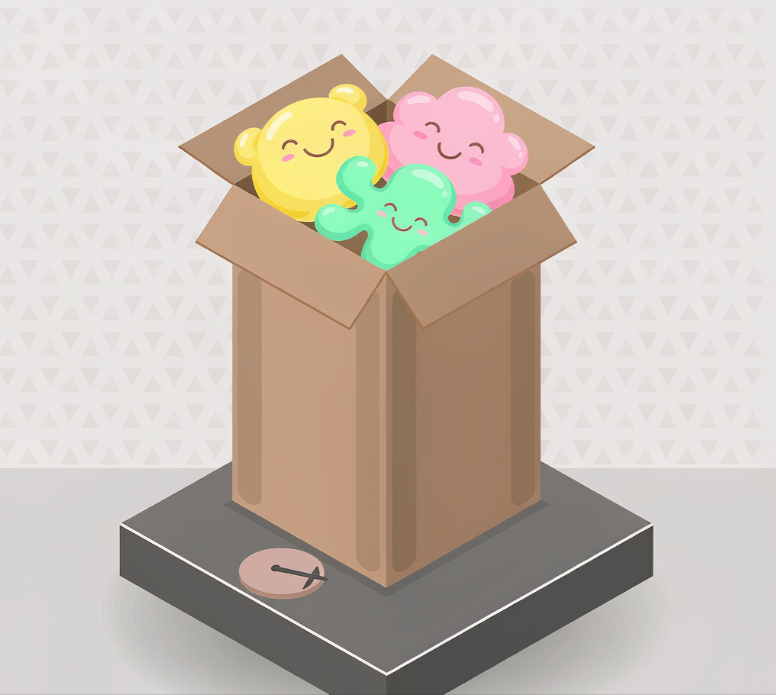
Soft filled toys are deceptively heavy. A carton of squishies looks like a carton of air — soft, squeezable, mostly harmless. On a freight quote, it behaves like a carton of flour.
The reason is construction. A quality slow-rising unit — say a 160g character — carries most of its weight in the filling. Flour-based and maltose-based fills are dense. Stack thousands of units into master cartons and you get a cargo with a density profile closer to dry goods than to plush.
That matters because freight pricing has two dimensions:
•Actual weight (gross weight, kg or lb)
•Volumetric weight (chargeable volume, m³ or cbm for sea; dimensional weight for air)
Carriers charge whichever punishes you more. For most squishy shipments, that is actual weight. You are shipping dense cargo in a category you priced as light cargo. That gap is where importers lose money.
Sea Freight: The Default for Full Orders
For production orders, sea freight is almost always the right answer. Three reasons:
1. Cost per unit collapses at scale. A full container (FCL) or a consolidated shipment (LCL) moves thousands of units at a per-unit freight cost that air cannot touch. On a typical wholesale squishy order, sea freight lands at a small fraction of the per-unit air rate.
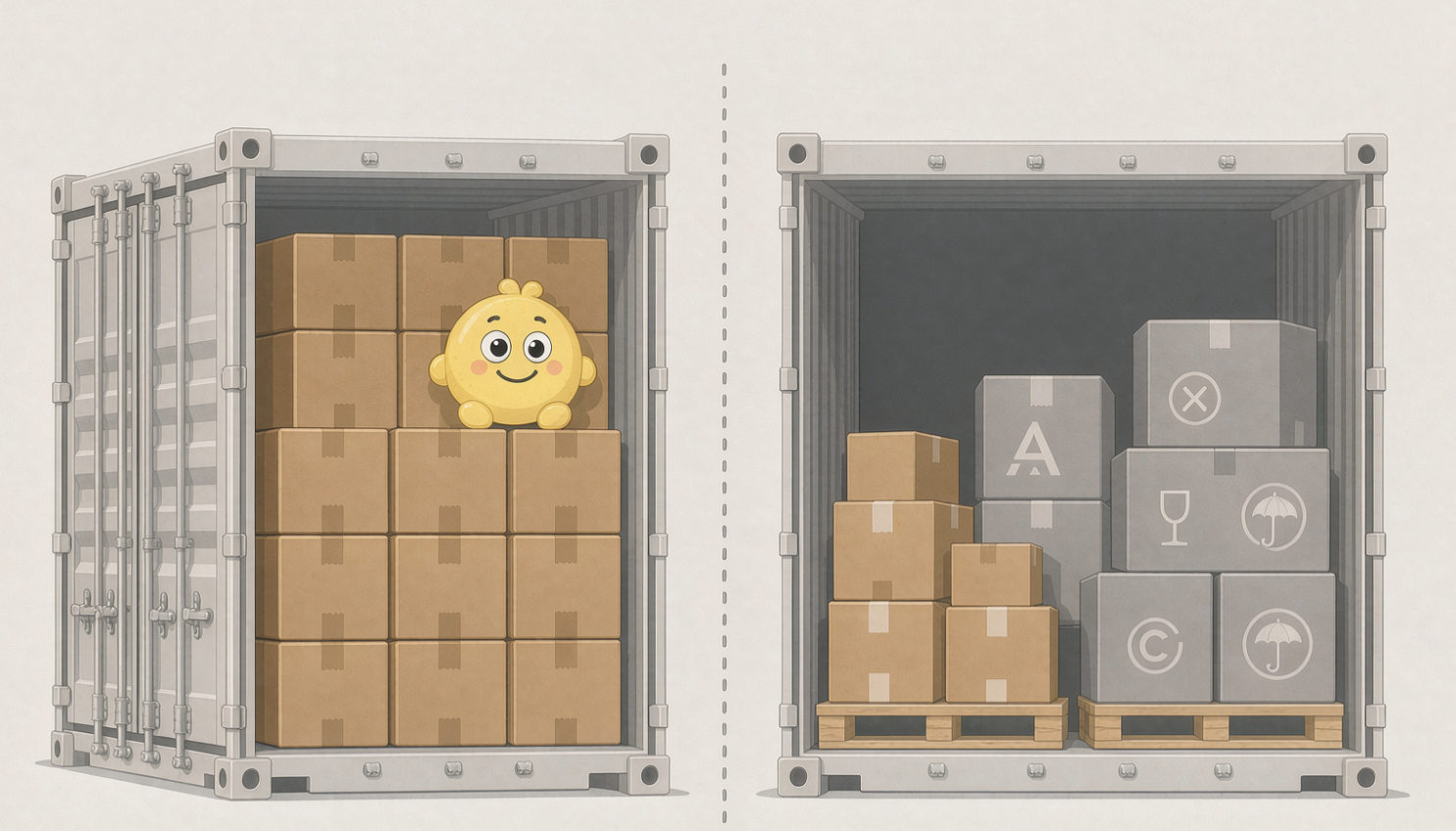
2. Squishies are not fragile. The product itself tolerates container conditions well. The risks are heat and compression, both manageable with correct packing — corrugated master cartons, sensible stacking height, and no overloading of carton weight ratings. Filling is not going to spoil; it is flour-based, not fresh food. Ask your factory about summer routing if the container transits extremely hot corridors.
3. Planning beats speed for restocks. Sea freight from China to the US West Coast typically runs a few weeks port-to-port; to Europe, longer; add inland legs and customs. That is only a problem if you order late. Order on a schedule and transit time is just a number on the calendar.
Watch LCL consolidation. If your order does not fill a container, consolidated shipping works, but per-cbm rates run higher than FCL and consolidation adds handling steps. For mid-size orders, the honest comparison is often LCL now versus a slightly larger FCL order — the container upgrade can be cheaper per unit than the LCL premium.
Air Freight: For Samples and Emergencies Only
Air freight has exactly two legitimate uses in this category:
1. Samples and prototypes. 3D-printed prototype samples and pre-production samples should fly. They are small, light, and their value is speed — you need them in hand to approve shape, color, and rise time before tooling money is committed. Sample air shipping is cheap in absolute terms and saves weeks of iteration time.
2. Emergency top-ups. A SKU went viral and your stockout date is inside your sea-freight transit window. A partial air top-up keeps the listing alive while the sea replenishment is on the water. This is a bridge, not a habit — the per-unit freight on a full order by air can approach or exceed the product's landed cost target.
One nuance: dimensional weight on air cargo bites squishy shippers twice. If your packaging is bulky relative to weight — header cards and blister trays add volume — the air carrier may charge on volume, not actual weight, and the rate jumps again. Air quotes for toy shipments should always be checked against both dimensions before you commit.
The Landed-Cost Worksheet Every Importer Should Run
Before choosing a freight mode, fill in these five lines per SKU:
1.Product cost (FOB) — what you pay the factory
2. Freight per unit— total freight divided by units shipped
3. Duty and tariffs — applied to the customs value of your goods; confirm the classification for your specific product and destination market with your broker, not from a blog post or an AI summary
4. Local last-mile and warehousing
5. Freight interest cost — the capital tied up in goods that spend 4–6 extra weeks on the water instead of in your warehouse
Line 5 is the one importers skip. Sea freight is cheaper per unit, but your cash is in transit longer. On thin-margin, high-velocity SKUs, the carrying cost of slow freight is real. On stable reorders, it is negligible. This is why the right answer differs between a launch shipment and a routine restock.
Sizing the Order: Why "Order Bigger, Ship Sea" Usually Wins
Toy freight economics reward fewer, larger shipments over many small ones:
•Every shipment carries fixed handling: customs entry, broker fees, last-mile. Spread across 3,000 units these costs vanish; across 300 they hurt.
•FCL per-unit rates beat LCL, which beat repeated air top-ups.
•Squishies do not expire. There is no shelf-life clock forcing small, frequent orders. The constraint is cash flow and storage — both solvable with planning.
The counterweight is trend risk. Viral toy demand is fickle. A massive order of a design that cools off becomes storage cost, discounting, or write-off. The disciplined pattern used by experienced toy sellers in this category:
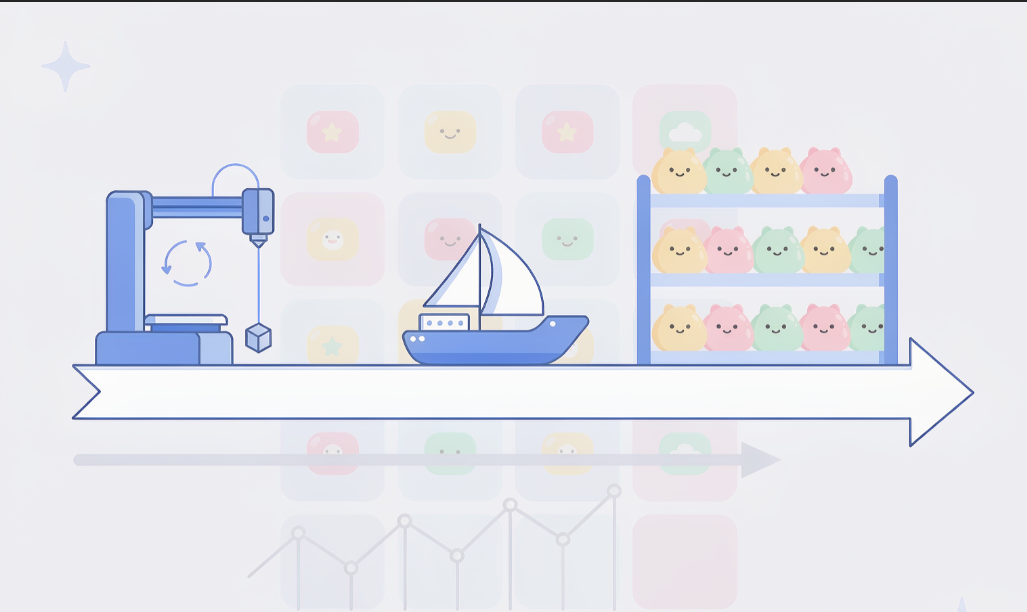
•Sample wide, launch narrow. Prototype multiple designs; commit production to your best one or two.
•First production order sized to proven velocity — what you can sell in one season, not what you hope to sell.
•Reorders by sea on a fixed rhythm — when a SKU proves itself, reorders of approved designs are cheaper at the factory (tooling is sunk, specs locked) and freight becomes a routine calendar exercise.
Factory-Side Factors That Quietly Change Your Freight Math
Three production decisions that hit your freight bill, worth raising before the PO:
Carton packing.Mixed-SKU cartons versus single-SKU cartons change your ability to cross-dock and pick efficiently at destination. Decide based on your warehouse workflow, not factory convenience.
Packaging format. Polybag-only packs maximize density. Header cards and retail boxes protect sell-through but add volume. There is a real trade-off between freight efficiency and shelf appeal — run the numbers on both before defaulting to either.
Palletization. If your destination warehouse handles pallets, specify palletized packing at the factory. Repalletizing at destination costs more than doing it right at origin.
A factory that ships export volume daily will have opinions on all three. Ask — the answer also tells you how much export experience you are actually working with.
Timing Restocks Around Transit Reality
The operational tempo that works for sea-freight toy importing:
1.Track sell-through weekly, not monthly. Your reorder trigger should fire when remaining cover equals production lead time plus transit time — with buffer.
2. Know your factory's real lead time, by season. Q3-Q4 pre-holiday production slots compress across the entire toy industry. The same order that takes weeks in spring can take noticeably longer when the whole market is rushing the same factories.
3. Keep one air-freight-sized cash reserve for genuine stockout emergencies on your top SKU. One bridge shipment per season is a tool; one per month is a planning failure.
4. Watch freight rate cycles. Container rates swing by season and by corridor. Booking a few weeks earlier or later can move the cost meaningfully on full containers.
Common Mistakes, Ranked by Expense
Priced the shipment as light cargo. The squishy density trap. You compared quotes assuming volumetric pricing; the carrier billed actual weight. Always get the quote against the real packed dimensions and weight of your actual cartons.
Air-freighted a full order to "be safe." Over-ordering certainty is expensive in this category. The cost delta between air and sea on production quantities typically dwarfs any benefit of earlier arrival — unless the earlier arrival itself drives sales, which only stockout situations justify.
Ordered small, repeatedly. Five LCL shipments instead of two FCL shipments. Same goods, materially higher total logistics cost, five customs entries instead of two.
Ignored the hot-corridor risk. Containers sitting in extreme heat during transshipment can affect surface finishes and prints. It is rare and manageable — but it is why you specify packing standards instead of assuming them.
Treated a viral spike as the new baseline. Reordered massive quantity against one viral week. Freight was fine; the write-down was not. Trend demand needs a bridge strategy, not a commitment strategy.
FAQ
Should I ship squishy toys by sea or air?
Full production orders go by sea — the per-unit cost difference is decisive at wholesale quantities. Air freight is for prototype samples and emergency stockout top-ups only.
Why is squishy toy freight more expensive than it looks?
Soft filled toys carry most of their weight in the filling, making them denser than comparable plush or hollow toys. Freight carriers bill on the higher of actual or volumetric weight, so dense cargo costs more per cubic meter than importers expect.
How long does sea freight from China take for toy orders?
Port-to-port transit to the US West Coast typically runs a few weeks; Europe and East Coast routings run longer. Add customs clearance and inland legs when planning reorder timing.
What is LCL versus FCL for toy shipments?
LCL (less than container load) consolidates your goods with other shippers; FCL (full container load) reserves the entire container. LCL suits smaller orders at higher per-unit cost; once an order approaches container volume, FCL is usually cheaper per unit.
Do squishy toys get damaged in sea freight?
The product itself handles container shipping well. The real risks are compression from over-stacked cartons and heat exposure on hot transshipment corridors — both controlled through packing specifications agreed with the factory.
How much extra inventory should I hold to cover sea transit?
A practical rule: reorder when remaining stock covers production lead time plus transit time, plus a safety buffer of a few weeks. Track sell-through weekly so the trigger fires early enough.
When is air freight worth it for squishies?
Three cases: prototype and pre-production samples (always), a stockout bridge on your top-selling SKU (occasionally), and lightweight high-margin launches where speed drives the entire business case (rarely).
The Short Version
Squishies are dense cargo in a light-cargo disguise. Ship production by sea, fly samples and emergencies, and run the landed-cost worksheet — including the cost of cash tied up in transit — before choosing. Then order on rhythm: sample wide, launch narrow, reorder by calendar. Freight stops being a gamble the day it becomes a schedule.
If you are planning a squishy or stress toy order, Playgoro ships export volume daily and will work through packing format, carton spec, and palletization with you before the PO — so your freight quote reflects reality instead of surprises. Send us your target quantities and destination port, and we will help you size the shipment properly.