
Squishy Filling Comparison: Dough, Maltose Gel, Jelly or Air?
Squishy Filling Comparison: Dough, Maltose Gel, Jelly or Air?
Squishy filling is the single decision that sets your retail price, your return rate, and your repeat purchase. Here is how the four mainstream fillings actually differ — from inside the factory.
Quick answer: Squishy filling determines feel, rebound time, durability and compliance route more than the outer skin does.
Dough/flour filling gives the softest, slowest rebound at the lowest unit cost. Maltose gel filling gives a denser, chewier squeeze with a wipe-clean surface. Jelly/petroleum-type filling produces zero-rebound "mushy" sensory play. Air-filled TPR is the cheapest and simplest. For B2B buyers the real question is not "which is best" but "which filling matches my channel, price band and age group."
Why the filling matters more than the shell
Buyers spend most of their sourcing time on the shell: the shape, the sculpt, the paint, the colour match. The filling is usually decided last, in one line of an email. That is backwards.
The outer TPR or TPE skin decides what the product looks like. The filling decides what it does — how it resists your thumb, how long it takes to rise back, whether it survives a humid container, whether it can be wiped clean, and which safety testing route it has to pass. Two squishies with identical molds and identical paint can be completely different products at retail purely because of what is inside them.
The commercial proof is in the numbers. The global stress-toy market expanded from USD 5.88 billion in 2025 to USD 6.26 billion in 2026, a 6.5% annual increase, and is projected to reach USD 7.95 billion by 2030 (The Business Research Company, June 2026). Within that, decompression-toy squishies already hold roughly 21.7% of the category, about USD 0.45 billion in 2025 (Dataintelo). On Amazon US, weekly search volume for the keyword "squishy" hit roughly 800,000 in late June 2026, ranking 16th across all search terms on the platform, with individual best-selling models moving up to 30,000–40,000 units per month (Asinsight, via The Herald Insight).
That demand is now driven by adults as much as children. The "kidult" segment accounts for roughly 28% of global toy sales and outspends every other consumer group. In South Korea the category even has its own name — malangyi — and retailers reported toy-department revenue rising around 200% in a single month after social media attention. Adults do not buy the same filling as children. They buy density, clean surfaces and a slow, deliberate rebound.
The four mainstream fillings compared
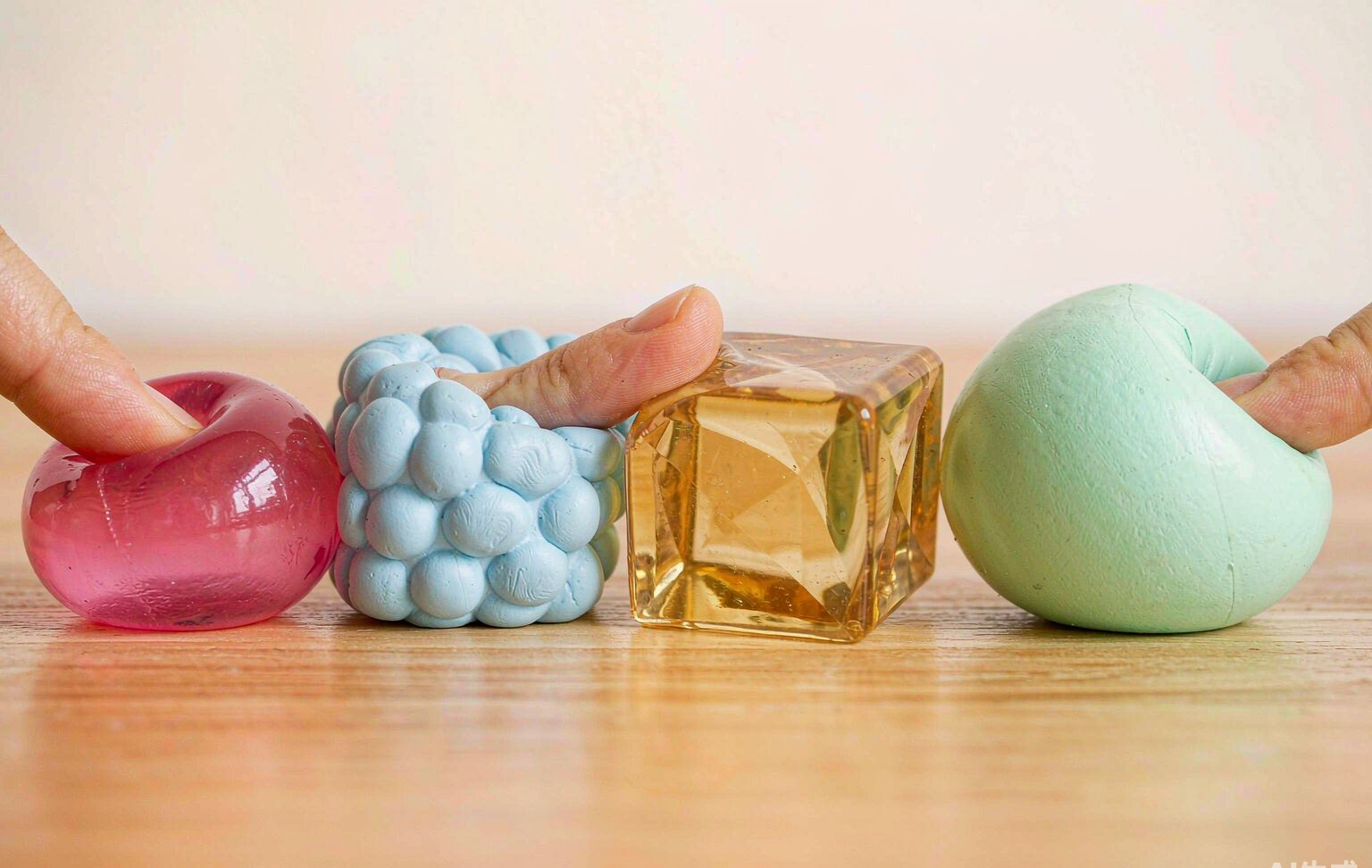
Almost every squishy on a retail shelf today uses one of four filling systems. Here is what each one actually delivers.
Dough / flour filling
The softest and the slowest of the four, and the one most shelves are built on. Press it and it yields without much argument; release it and it takes its time coming back, usually in the five-to-eight second range. That rising delay is the whole point of the product — it is the effect customers photograph and post.
•Feels soft, dense and clay-like, with very low initial resistance
•Rebound is slow, roughly 5–8 seconds
•Best for mass-market retail, ages 4–12, party favours and bulk SKUs
•Not waterproof — needs a sealed inner bag for humid shipping, and has a shorter lifespan than the gel options
Maltose gel filling
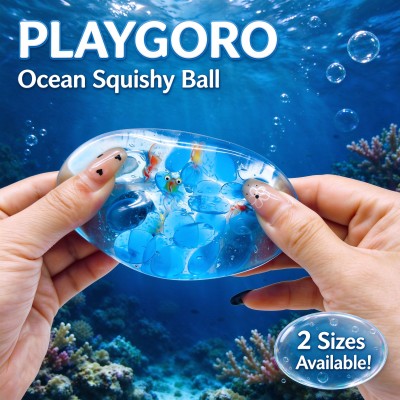
The most balanced of the four, and the one we ship most often to buyers who are pricing above the discount aisle. There is real resistance when you press — the ball pushes back before it yields — which reads as substance in the hand. The sealed TPR surface wipes clean, so it survives a desk, a bag and a commute.
•Feels denser and chewier, with noticeable initial resistance
•Rebound is medium — controlled and even
•Best for teens and adults, desk fidgets, corporate wellness and premium cubes
•Softens under high heat, and is the wrong choice if you want an ultra-soft, collapsing "mushy" squeeze
Jelly / petroleum-type filling
The extreme end of soft. This one barely rebounds at all — press a thumb in and the dent stays where you left it. That near-zero return is exactly what the adult sensory and ASMR audience is buying, and it films beautifully. It is also the most demanding to ship, because oil wants to migrate.
•Feels very soft, glossy and deep-sinking
•Rebound is near zero — it holds the dent
•Best for adult sensory and ASMR collectors, and premium handmade ranges
•Oil migration and leakage risk, temperature sensitive, and not washable
Air-filled TPR
The simplest construction: a TPR shell with air inside and a valve to hold it. Fast to tool, cheap per unit, and springy in the hand — but it feels light and hollow rather than substantial, so it carries a promo price point and not a premium one.
•Feels light, springy and hollow, with little resistance
•Rebound is fast
•Best for entry price points, promotions, giveaways and volume promos
•Feels simple rather than premium — valve and seam quality are the critical specs
One important note on language: you may see "food-grade" used to sell fillings. Treat that claim with scepticism. Squishy toys are toys, and the correct framing for a squeezable toy is toy-grade material plus documented third-party testing. Retail buyers who understand the category will ask for test reports, not adjectives — and a supplier who leads with "food-grade" is usually avoiding the more useful conversation.
What actually goes wrong — and why the filling is the usual culprit
The category's safety news in 2025–2026 has been dominated by filling failures, not skin failures.
In May 2026, the US Consumer Product Safety Commission recalled approximately 121,340 Orb Funkee squeeze toys sold at Walmart and Ollie's Bargain Outlet between February 2025 and April 2026, because the sand filling may have contained fibrous tremolite — a form of asbestos that can cause cancer if inhaled (CPSC recall notice, 21 May 2026). Around the same period, the UK's Office for Product Safety and Standards recalled a line of dumpling-shaped squishies over an excess concentration of benzene, and a Toronto Star investigation detected low levels of volatile organic compounds in a sample of similar products (Scientific American, 2025).
Two patterns are worth internalising as a buyer:
1.Contamination comes in with the filler. Unverified sand, reclaimed polymer or cheap solvent-based compounds are where the recalls originate. A documented, single-source filler with a batch-level test report removes most of this risk.
2.Leakage and small parts are a filling-design problem. Bead and liquid fillings raise the stakes on seal strength and plug retention. If the skin fails, the contents become a potential small-parts hazard — which is why many brands shift bead-filled products to a 14+ age recommendation.
The honest trade-off is this: softness and low cost usually come with a shorter service life, and durability usually costs weight and money. A supplier who promises you all three at once is selling you a spec sheet, not a product.
The seven-question sourcing checklist
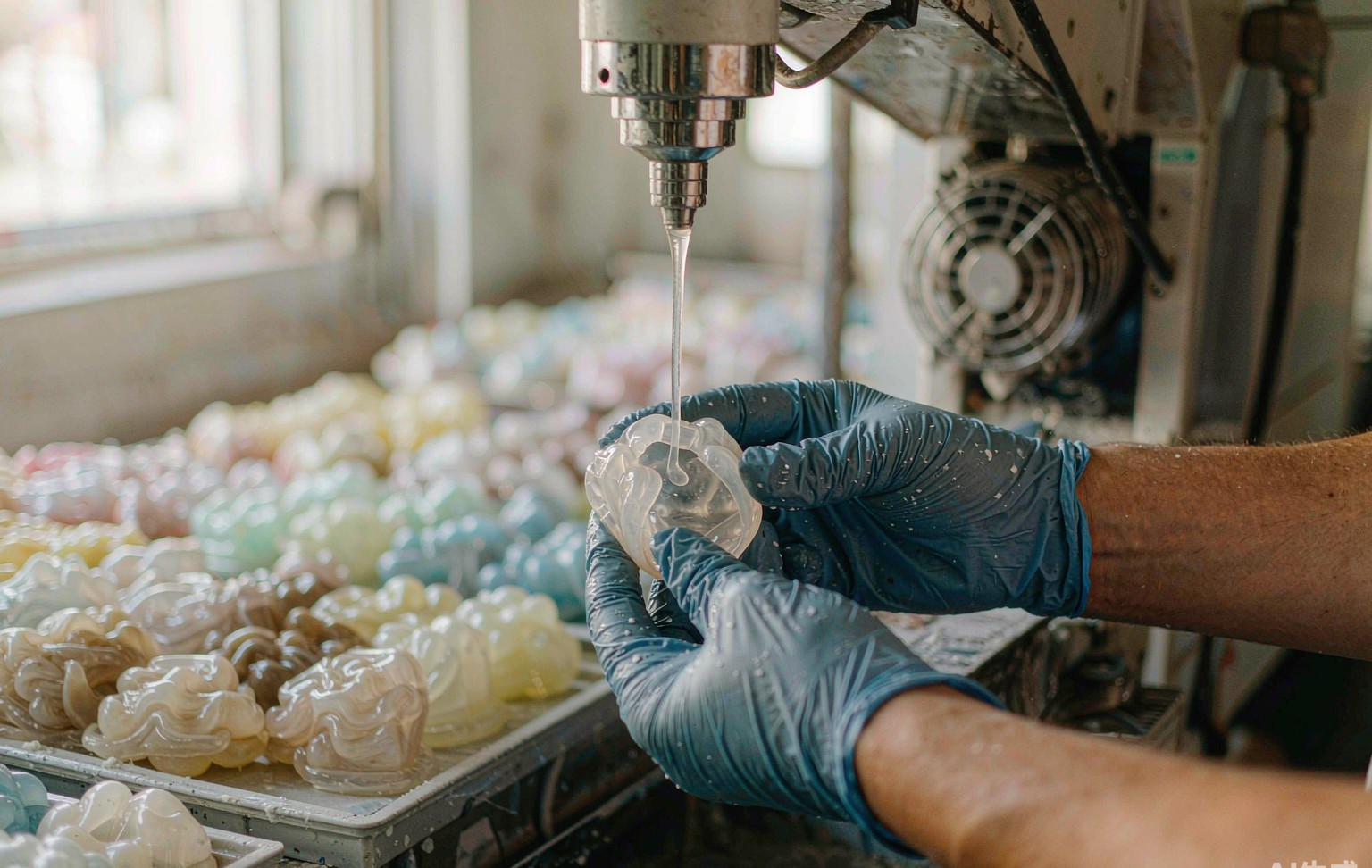
Run any squishy supplier through these seven questions before you commit to tooling. They are the same questions we get asked by buyers, in the same order.
What exactly is the filling, by material name? "Soft filling" is not an answer. You want the polymer or foodstuff named, plus the filler's own supplier.
What is the measured rebound time, and how was it measured? Ask for the test method, sample size and the range — not a single flattering number.
What is the fill weight per unit? This is what your customers feel as "quality" and what your freight invoice reflects as weight. Both matter.
Which test reports exist, and can I see the batch? ASTM F963 and CPSIA documentation for the US; EN 71 for the EU. Ask for the report tied to your production batch, not a generic certificate.
How does the filling behave after 30 days in a humid container? If the answer is "it's fine," ask for the sealed inner bag spec and an ageing test.
What is the failure mode? Any honest factory will tell you where the product fails first — seam, plug, paint wear or filling migration. A supplier who cannot name a failure mode has not tested the product.
Can the filling be swapped without re-tooling the mold? Usually yes. This is how you build a price ladder — same sculpt, three price points — without paying for three molds.
Matching filling to channel, price band and age group
The right filling is a market decision before it is a technical one. Four common combinations work again and again:
Discount retail, party favours and bulk promo. Entry price band, dough/flour or air-filled TPR, framed at 3+ or 4+. Volume lives here, and so does price pressure.
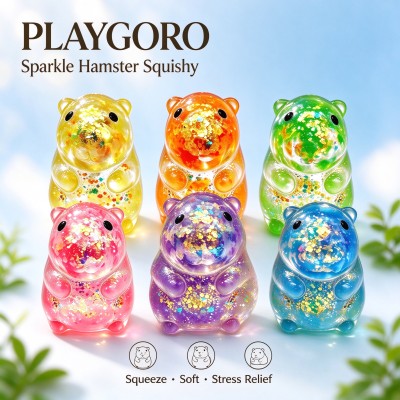
Designer toy retail, stationery and gift. Mid band, maltose gel inside a translucent TPR shell, framed at 8+ or 12+. This is where the texture is part of the sell, so the see-through shell earns its cost.
Adult sensory, collector drops and ASMR. Premium band, jelly-type filling — or bead and sand fills where weight is the feature — framed at 14+ or adult.
Corporate wellness and gifting. Mid to premium band, maltose gel with a wipe-clean surface and a branded box.
The useful trick for retail buyers is the shared-sculpt ladder: commission one sculpt, then ship the same character as an entry dough-filled version, a mid maltose-gel version and a premium jelly version. The tooling cost amortises across three SKUs, and your shelf story becomes a choice rather than a single product.