
The Science of Squish: How Squeeze Toys Became a Mental-Health Tool
Once relegated to the pediatrician's waiting room, the humble squishy has migrated onto office desks, into backpacks and onto "For Sale" shelves priced like collectibles. Now a second migration is underway — into the language of mental-health science. Researchers, clinicians and consumer psychologists are asking a sharper question: beyond the fad, does squeezing actually help us regulate, and what does the evidence say?
What the experts say
Florida State University put the question to two of its own. Dr. Brad Schmidt, director of FSU's Anxiety and Behavioral Health Clinic, explains that squeezing an object like a NeeDoh can calm the brain and body by offering "a simple, repetitive sensory-motor task." That physical engagement shifts attention away from racing thoughts and helps ground a person in the present moment — and because touch is "one of the brain's most basic signals of safety," predictable tactile input can feel regulating. He is careful to add the caveat: it is "more adaptive than the 'three-martini lunch,' but… not likely to be a solution to a more significant problem with stress and anxiety."
From the business school, Dr. Cammy Crolic frames the boom as "haptic marketing" meets an anxious moment. NeeDohs are "process-oriented" — enjoyment comes from ongoing use, not completion — which extends their lifespan versus typical toy fads. And in times of economic and political uncertainty, she notes, consumers gravitate to "small, affordable indulgences" that restore a sense of control: the classic "lipstick effect," now in squeeze form.
What the research actually shows
A 2026 scoping review in Pediatric Anesthesia (Wiley) mapped 15 studies from 2017–2026 on fidget and sensory toys. The verdict is nuanced but useful: in educational settings the evidence does not support using these toys to improve attention or grades. In healthcare and procedural settings, however, the studies generally suggested reductions in anxiety, pain, fear and distress. Separately, a 2026 review of randomized trials in the Journal of PeriAnesthesia Nursing found stress balls produced small reductions in anxiety for patients who stayed awake during surgery.

Why might squeezing beat a fidget spinner? A 2019 German study found that spinners and doodling impaired memory, while stress balls neither helped nor harmed — because squeezing does not demand the visual attention a spinning toy does. The takeaway for buyers: a quiet, hand-occupying squeeze is less likely to become a distraction than a flashy gadget.
From anecdote to clinical trial
The most striking sign of legitimacy: a registered randomized controlled trial. The STARFISH study (NCT07270029), launched January 8, 2026, is enrolling 500 children across multi-centre sites in Australia and Brazil to test whether a pre-operative sensory toy reduces anxiety before surgery. If it holds up, a $5 squeeze could become a documented, low-cost intervention — with implications far beyond the toy aisle. Context matters: the WHO-era data show childhood anxiety diagnoses rose from 6.9% to 10.6% between 2016 and 2022, and autism affects roughly 1 in 100 children globally.
What this means for Playgoro
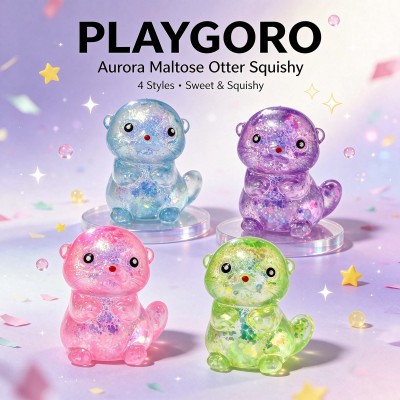
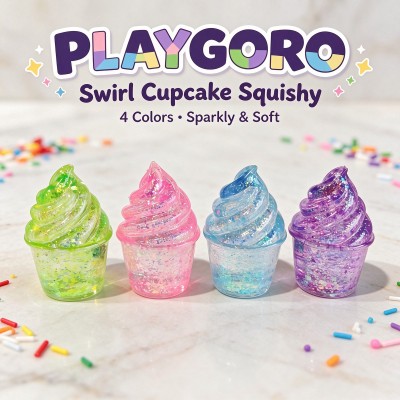
The science does not promise a cure — and responsible brands say so. What it does support is a clear, defensible positioning: decompression toys are evidence-aware self-regulation aids, most useful as a daily, discreet, non-pharmaceutical complement to real coping strategies. For a manufacturer, that raises the bar on material safety and trust: a toy promoted for well-being must meet the toughest chemical and durability standards (China's GB 6675.14-2025, U.S. CPSC/ASTM), because the moment a "wellness" product is found unsafe, the trust collapses. "Compliant, honest, and genuinely comforting" is the only claim Playgoro is willing to stand behind.