
Squishy Toys Grow Up: From Desk Relief to Senior Care
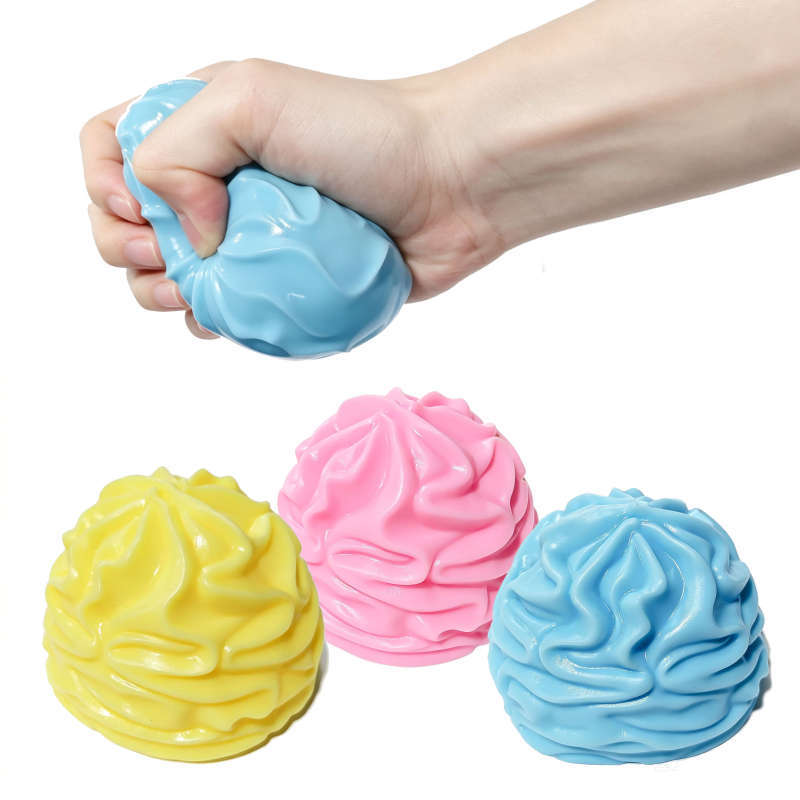
A soft, palm-sized shape needs no instructions — the hand simply knows what to do. Open product page →
A 7 November Xinhua dispatch from the ninth China International Import Expo (CIIE) in Shanghai put two trends side by side. On one side, age-friendly design was everywhere: a seated shower with grab rails and a water-level alarm at the Panasonic booth, a globally debuting age-friendly lift, an Asian-debut hearing aid, home-training fitness equipment. Several exhibitors described China's "silver economy" as "a huge potential market" that had to be entered early. On the other side was "emotional consumption": LEGO explicitly aimed its CIIE booth at adults for the first time, with 26,400 brick flowers at the entrance, and a booth staffer told Xinhua that "the pleasure of building has no age limit". Next door, alpaca-plush maker Enqiao turned its stand into what the reporter called a tactile "experience site" — in under ten minutes, three or four groups of visitors placed orders on the spot. Its booth has grown from 18 m² at the first CIIE to 108 m² this year, and manager Zhang Yunquan credits China's "emotional consumption" wave.
Read together, the two halves of that report describe one market. The adult who reaches for a textured object on a desk and the older adult who reaches for one in a care lounge are doing the same thing: looking for a small, quiet, familiar sensation in the hand. What changes is not the squeeze — it is the brief.
Care settings make the shift visible
At the same CIIE, Knews reported a marked increase in elder-care exhibits, including a daily-living simulation device that turns memory practice into a familiar routine: choose dumpling wrappers, pork and salt in a virtual supermarket; drive home; pull a realistic door handle that clicks; pinch the wrappers together with both hands; turn on the stove and then switch it off. Staff explained that people with cognitive impairment progressively forget everyday skills such as shopping or boiling water, and that real life offers few chances to rehearse them safely. This is a training device, not a toy — but the point it makes about familiar hand movements is one the toy industry should hear.
Four days later, on 11 November, CNR reported the opening of the "Yijiaren" cognitive impairment care ward at Wuhan Puren Hospital. Beyond the medical programme, the ward is laid out as a tactile environment: a touch zone, music and memory zones, and a sensory training room built around sight, hearing, touch and smell, using a water bed, aromatherapy and fibre-optic lights to calm agitation. Ward director Wang Ping says the touch zone uses varied materials to stimulate perception. The clinical team also lists reminiscence therapy, cognitive training, attention training and emotional-behaviour intervention as non-drug approaches. None of these is a retail squishy. All of them treat the hand as a legitimate route to comfort.
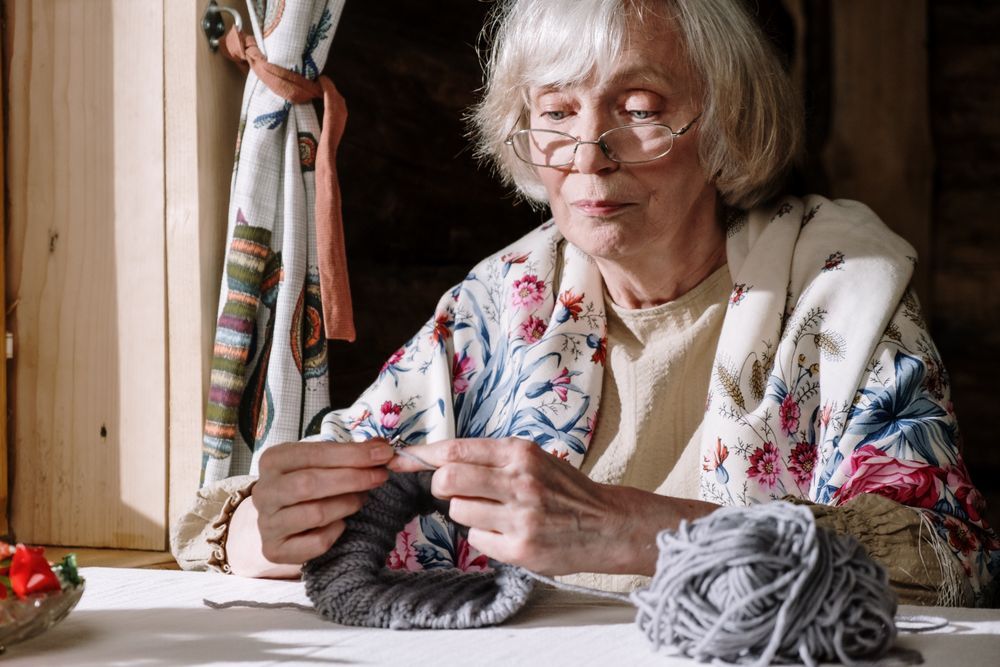
Familiar, purposeful movement of the fingers — the same logic behind a comfort object that asks nothing of memory. (Illustrative photo, not a Playgoro product image.)
A design brief, not a medical claim
It is worth being precise. In the UK, Alzheimer's Society guidance and NHS trusts have long recommended "fiddle" products — knitted twiddle muffs, sensory blankets, activity aprons, textured fabrics — as comfort items for restless hands, and NICE recommends activities tailored to a person's preferences and life history. At the same time, a Cochrane review found the evidence for multisensory stimulation in dementia care too weak to prove lasting effect. These are comfort and leisure tools, not medical devices or treatments. Any comfort object for older users should be assessed by the care provider, matched to the individual and used under appropriate supervision. Playgoro makes no therapeutic claims.
What the care sector does offer is an unusually clear specification. Guidance repeatedly asks for objects that work without memory or language, that feel adult and dignified rather than childish, and that are safe for hands that may mouth, pull or tire easily: large, easy-grip forms; matte, warm, high-contrast colours; no detachable small parts, long ribbons or sharp edges; washable surfaces; low odour and quiet operation. That same checklist is emerging in China's own age-friendly product sector. At the 12th China International Senior Care Expo (SIC), 26–28 November at Guangzhou Poly World Trade Center, Suzhou-based Weiqing Health Technology is showing wooden cognitive puzzles under a principle it calls "genuinely age-appropriate, not infantilising" — no borrowed children's toy aesthetics.
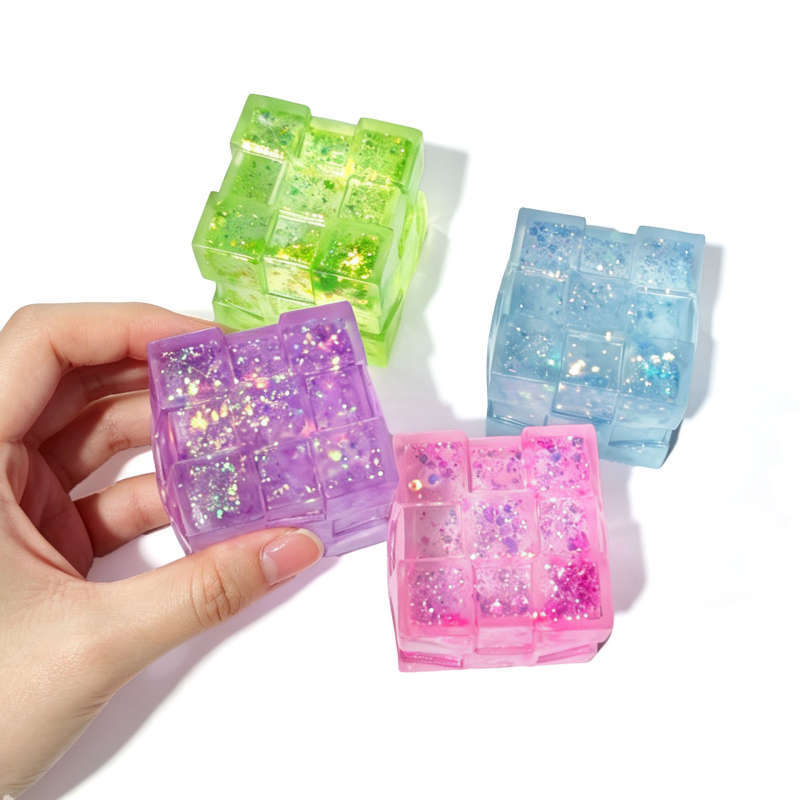
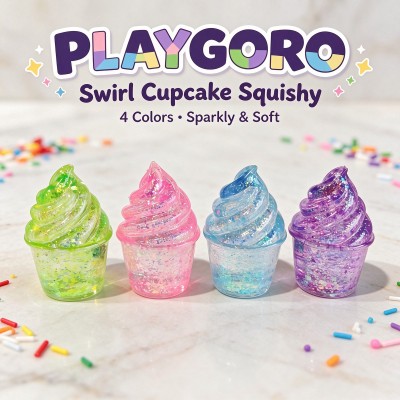
One mould, four calmer colourways: colour and resistance can be tuned without redesigning the shape. Open product page →
The category is splitting into two briefs
SIC's exhibitor list shows how far specialisation has gone. Yinlejian (Guangdong Junyi Design), a national high-tech enterprise and a drafter of a group standard for age-friendly toys, is bringing four series for care institutions and communities. Its plush comfort sleeve pet is a soft dog or panda with a detachable multi-function sensory blanket and finger-tip modules — straps, buttons, braided cords, zips and grip pieces — in a wearable sleeve that can be used sitting or lying down. That is a purpose-built care product, with a purpose-built price and certification path. It is not what a general squishy factory should copy.
The realistic opportunity sits one step back: an all-age version of an existing SKU. The same TPR skin, maltose or flour filling and slow-rise foam can be specified with a gentler rebound, larger rounded corners, a matte finish, softer or higher-contrast colourways, fewer cartoon faces, a wipe-clean surface and low-odour material — plus the documentation institutional buyers actually read: China's GB 6675.14-2025, U.S. CPSC / ASTM F963, EU EN71 / REACH, material declarations and batch test reports. A rest-home buyer is not asking for a cuter animal; they are asking whether the item will still be clean, intact and pleasant to hold after a hundred handlings.
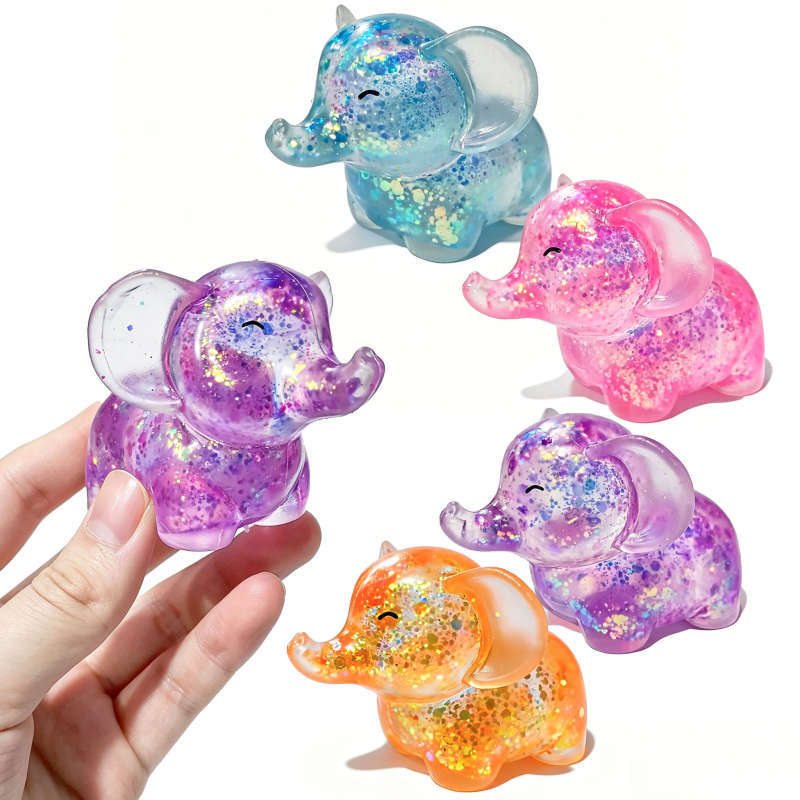
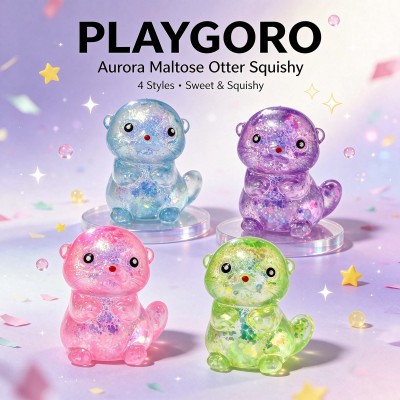
Familiar animal shapes carry recognition and affection without a single word of instruction. Open product page →
What this means for Playgoro
Playgoro already controls the variables this new brief depends on: toy-grade TPR skins with a controlled ~8-second slow rise, maltose or flour fills, several colourways and firmnesses from one mould, custom sculpting, private moulds and embossed branding, backed by GB 6675.14-2025 / CPSC-ASTM F963 / EN71-REACH documentation, material declarations and batch test reports. For buyers serving adult and senior users, we can tune those variables toward an adult-leaning line: matte pastel or warm high-contrast colours, no infantile graphics, generous rounded grips, easy-clean skins and low-odour materials, in bulk packs with consistent batch-to-batch hand feel. We supply comfort and sensory play items, not medical products; suitability, supervision and care protocols remain the buyer's and the care provider's call. The desk toy and the care-home comfort object are separated by a specification sheet, not by a new factory. Getting that sheet right is the whole job.
Sources: Xinhua / Wang Moiling, "From CIIE hits to new consumption trends", 7 Nov 2026 (via 81.cn, 8 Nov 2026); Knews / Sina, CIIE daily-living cognitive training device, Nov 2026; CNR / Tencent News, Wuhan Puren Hospital "Yijiaren" cognitive care ward, 11 Nov 2026; SIC China International Senior Care Expo exhibitor previews (Yinlejian / Guangdong Junyi Design, 23 Oct 2026; Weiqing Health Technology, Oct 2026); Alzheimer's Society and NHS guidance on fiddle products; NICE dementia quality standard; Cochrane review on multisensory stimulation; Playgoro (Custom Squishy Toys: B2B Sourcing Guide).
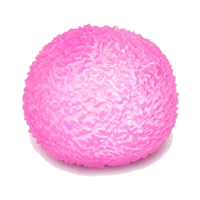
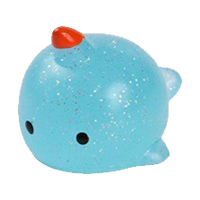
Three illustrations are Playgoro's own product photos — click an image to open its product page. The photo of an older woman working with yarn is an illustrative stock image, not a product photo, and carries no product link. Nothing on this page is a medical claim.