
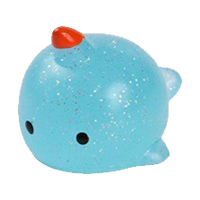



Squishy Shelf Life: What 12 Months in a Warehouse Actually Does
Factory Notes · Shelf Life
There is a steel cabinet at the back of our workshop with a strip of masking tape on every shelf. On the tape: a batch number and a filling date. We keep one piece from every production run that looked even slightly different from the last one.
Last month I pulled the oldest bag. Two years and one quarter. The shell was intact. No leaks, no cracks, seams still clean. But it was not the same toy that went in.
It felt soft in the wrong way. The surface had gone tacky — not wet, just grippy enough to hold dust. Pressed it, and the rebound had slowed to something closer to a memory than a bounce. Opened the bag and there was an oil smell that was not there on day one.
Nobody complained about that piece. It never reached a customer. That is the whole reason this topic stays invisible: squishies fail quietly, in warehouses, months before anyone files a claim.
Quick answer
A sealed TPR squishy stored at room temperature typically holds its feel for 6 to 12 months. The shell is rarely the weak point — the filling is. Raw flour filling can turn in 1 to 3 months; cooked, sterilised filling held at water activity under 0.85 reaches 6 to 12. Heat and humidity decide where in that range you land, not the calendar alone.
The clock starts at the filling nozzle, not the loading dock
Most buyers date a squishy from the day it leaves the factory. That is already late. The clock starts the moment the filling goes in, because that is when water activity, pH and microbial load get fixed for the life of the product.
Two factories can run the same 3D file, the same TPR hardness, the same Pantone. One ships a toy with eight months of good feel left. The other ships one with six weeks. The difference is not the mould. It is whether the filling was cooked and sterilised before it went in, and whether anyone measured water activity afterwards.
Water activity — not moisture content — is the number that matters. Below roughly 0.85, mould and most spoilage organisms cannot get a foothold. Above it, you are shipping a growth medium in a sealed bag. We have written separately about how filling choice changes hand feel and stretch; the storage half of that trade-off is the part almost nobody asks about at quotation stage.
Twelve months, four checkpoints
What follows is the pattern we see in our own retention samples and in returns that come back with a date on them. It is workshop observation, not a lab report — at the end I will tell you how to get a real report instead of trusting anyone's memory, including mine.
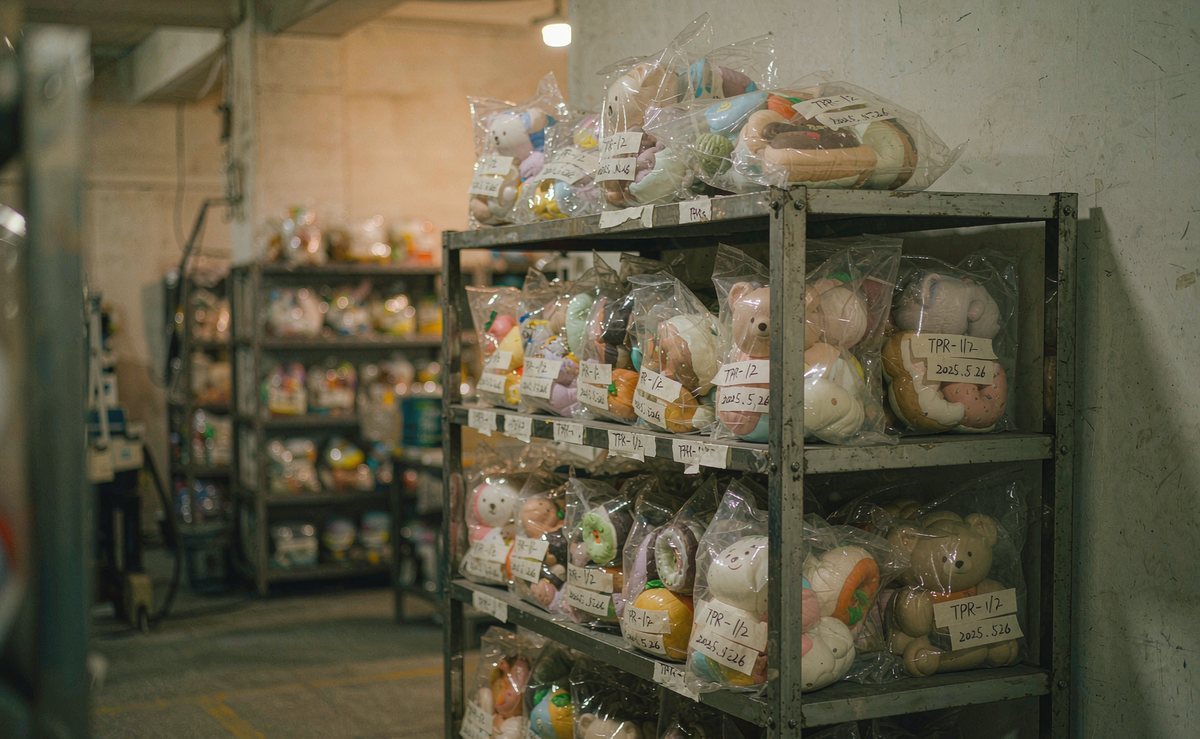
Everything is still where it should be
Oil sits bound inside the SEBS network. Surface is dry to the touch, or dry enough. Rebound is at design speed. Seam is clean, bag is tight, no smell beyond the compound itself.
What to do: photograph and log this state. Without a day-one reference, nobody can prove anything changed later — and every claim becomes an argument about memory.
The real ageing happens at sea, not on your shelf
A container is not a warehouse that moves. On a China–Europe routing the air inside swings from single digits at night to 50–65°C under deck sun in the day, while relative humidity peaks above 85%. Over a 25-day voyage that cycle repeats roughly 25 to 30 times. Condensation forms on the container ceiling and drips onto cartons — the industry calls it container rain, and on tropical routings it is closer to a certainty than a risk.
Three weeks in that box does more to a squishy than six months in a decent warehouse. Goods can arrive physically perfect and chemically a year older.
What to do: this is why the storage question is really a shipping question. If you are choosing between sea and air on cost, price the ageing too — we broke the numbers down in our sea vs air shipping cost comparison.
The surface starts to give the game away
Mineral oil that was happy inside the SEBS network begins to migrate. It shows up as a thin film — suppliers call it bloom or exudation, buyers call it "why is it sticky". The toy is not dirty and it is not defective in any way a lab would flag. It is doing what soft TPR does when it gets warm.
The knock-on effects are the expensive part: dust pickup in retail, weaker adhesion for labels and printing, and a grippy surface that feels cheaper than the sample did. Heat accelerates this sharply — above about 35°C, or above 80% relative humidity, migration speed steps up rather than drifts.
What to do: watch the surface before you watch anything else. Tackiness is the earliest visible signal you get, and it appears months before the filling becomes a problem.
The filling files the complaint
By now the shell is usually still fine and the inside is not. Water migrates through the TPR wall at a slow but non-zero rate; water activity creeps up; the filling that was a smooth gel starts to separate, stiffen or thin out depending on what it is made of. Sugar-based fillings pull moisture and go runny. Flour-based fillings dry into lumps. Either way the hand feel that sold the product is gone, and it is gone in a way no amount of kneading fixes.
What to do: stop treating this as a defect and start treating it as a date. A squishy is a short-life good with a long-life appearance, and your reorder cycle should reflect that.
So why does everyone blame the shell?
Because the shell is what you can see and touch, and because a sticky surface looks like a material failure. But TPR itself is fairly robust. The degradation routes that matter — oil migration, oxidation, UV yellowing — are driven by the environment the toy sits in, not by the polymer giving up on its own. Skin thickness, gel fill weight and rebound speed are set when the piece is built, and a well-built slow-rising shell will outlast the filling inside it almost every time.
There is a case that gets passed around the industry and matches what we see: identical compound, identical hardness. One batch stored near a warehouse window through a hot summer showed visible oil within three months. Another batch, same recipe, sat in a temperature-controlled warehouse and was still clean at six. Same toy. Different address.
Which is why "can a squishy last two years?" is the wrong question. The right one is "where will it sit, and for how long before it is squeezed by a customer?"
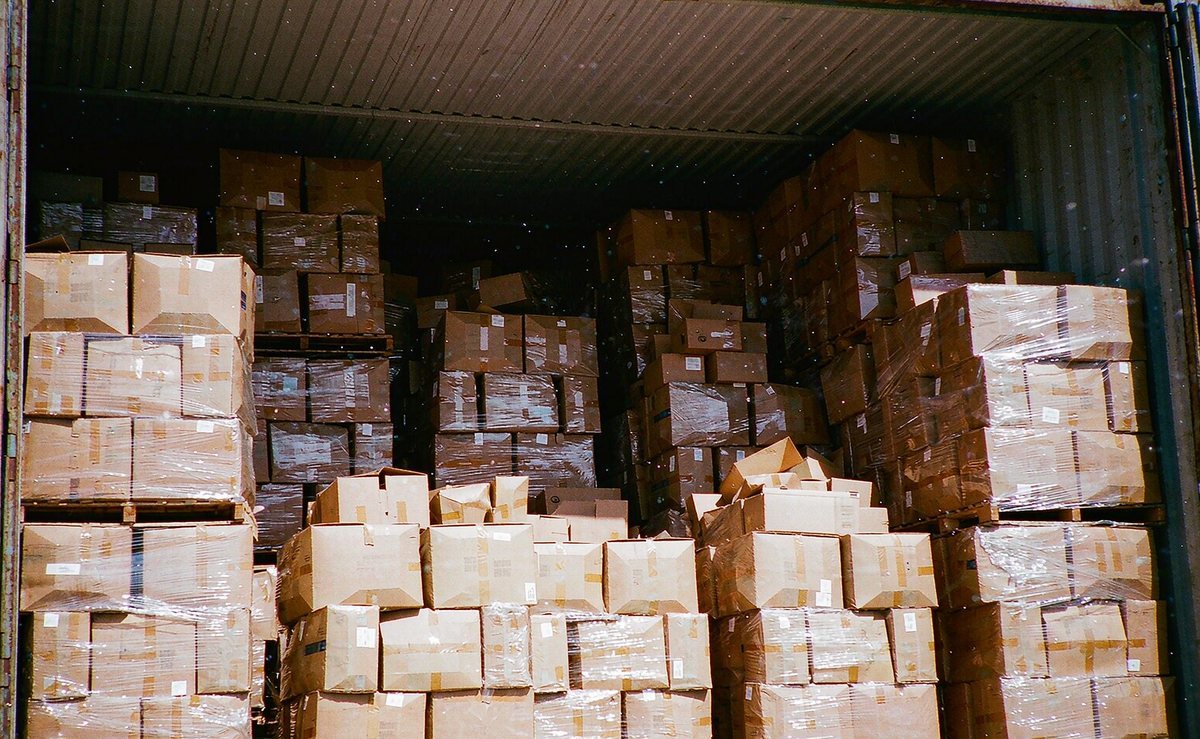
The filling decides your number
This is the table worth bringing to a quotation meeting. Ranges are workshop experience across our own runs and customer feedback, not guarantees — formulation and packaging move them.
| Filling type | Sealed, room temp | First failure signal | Where it fits |
|---|---|---|---|
| Raw flour, uncooked | 1–3 months | Sour smell, mould spots, water weeping at the seam | Nowhere. This is the cheap option that comes back as a claim. |
| Cooked, sterilised flour base | 6–12 months | Local hardening, lumps that will not knead out | Volume programmes, long retail channels, Q4 stocking |
| Maltose / syrup gel | 6–12 months | Thins out, water separates, surface goes slick | High-stretch, slow-pull hand feel |
| Jelly / gel | 12 months plus | Slow shrink, slight syneresis at the base | Slow-rising hero SKUs |
| Air only, hollow shell | Very long | Nothing ages — but it does not feel like a squishy either | Low-cost giveaways, licensed premiums |
Two rows in that table are the whole argument. Raw flour and cooked flour are the same ingredient with a different process step between them, and the shelf life differs by a factor of four. If a supplier quotes you six months without telling you which row they are on, the quote is not information. If you want to see which rows our current catalogue sits on, the wholesale squishy toys range lists filling type per SKU.
Three storage addresses, three different products
Same batch, three places, three outcomes. This is the part buyers underestimate most, because storage is usually someone else's job — a 3PL, a distributor, a warehouse the brand has never visited.
Temperature-controlled warehouse. 10–25°C, 40–60% relative humidity, out of sunlight, cartons sealed. This is the only condition that delivers the top of the range. It costs money and it is worth it for hero SKUs.
Retail floor or showroom. Spotlights, south-facing windows, heating in winter and no air conditioning in August. Surface temperatures near glass can run far above ambient. Expect the sticky-surface checkpoint to arrive early, and expect it on the pieces at the front of the display while the stock in the back room is still perfect.
Whatever was cheap. A garage, a mezzanine, a container parked behind the unit. Uninsulated metal in summer behaves like the voyage did, without the sea breeze. Goods stored here for a summer can lose most of their usable life before they are ever picked.
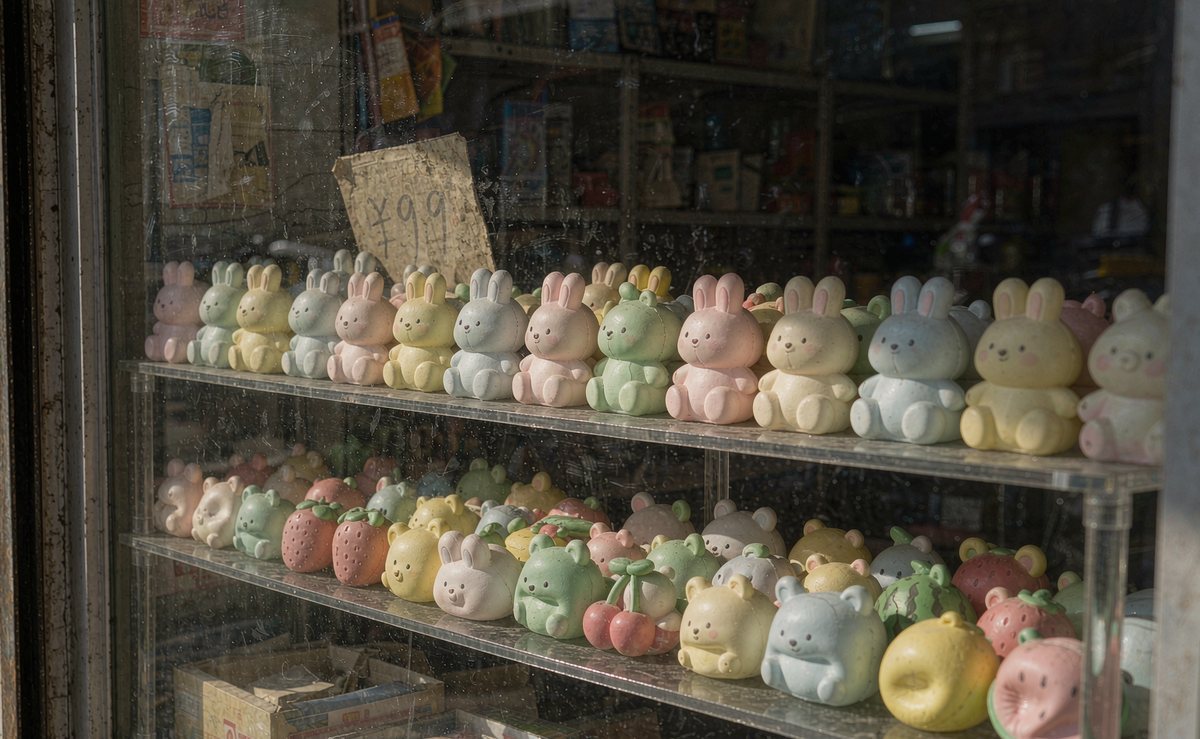
Four things to put in writing
None of this requires new equipment. It requires the shelf-life conversation to move from marketing copy into the purchasing file.
- Filling date, not just production date, on the carton. A batch code that cannot be traced to a filling day cannot support a FIFO system. Ask for the date the filling went in and have it printed on the outer carton.
- A storage clause next to the AQL clause. Your inspection standard covers what the goods look like on the day they are checked. Add the temperature and humidity range they are expected to live in, and who is responsible for it after handover.
- Ask for a hot-humid conditioning run. This is the cheapest time machine available. Condition samples at 40°C and 90% relative humidity for 72 hours — the tropical profile in ASTM D4332, and the condition ISTA 2A uses to pre-treat sea freight — then check surface tack, rebound and smell. If a supplier cannot or will not run it, that tells you something too.
- Run FIFO on filling dates. A squishy is not a screw. Two pallets of the same SKU are not interchangeable if one is four months older, and the older one needs to ship first even if it is at the back.
The Q4 trap
Demand is not the problem. The stress toy market has been growing in the mid single digits and passed USD 6 billion in 2026 on most published estimates, with adult buyers — not children — driving the increase. That growth is exactly what pushes brands to place Q4 orders in spring and take the cheapest sea slot available.
Do the arithmetic on that plan. Goods filled in April, three to four weeks at sea through a tropical routing in June, arrival in July, three months in a 3PL, on shelf in October. The customer who squeezes it in December is handling a product that has already spent the best part of its usable life in transit and storage.
There are only three honest answers: order earlier so the ageing happens on your side where you can control it, pay for air on replenishment so the stock is young when it lands, or accept that you are selling a short-life good and set your returns policy and reorder cadence accordingly. What does not work is promising a two-year shelf life because a competitor's listing says so. If returns and liability exposure are already on your list, the squishy toy risk map puts shelf life next to the other two exposures buyers usually miss.
Questions buyers actually ask
Do squishy toys expire?
Yes, and faster than most categories. Sealed at room temperature, expect 6 to 12 months of good hand feel with a properly processed filling. Raw flour filling can turn in under three months. The toy will not fall apart — it will just stop feeling like the sample.
Can I freeze stock to extend the shelf life?
Do not. Freezing buys you nothing on oil migration and adds condensation on thaw, which is worse for the filling than steady warmth. Cool, dry, dark and stable beats cold and cycling every time.
Why did the surface get sticky?
Almost always oil migration from the SEBS network to the surface, triggered by heat and time rather than by dirt or a bad batch. It is cosmetic in most cases, but it is also the earliest warning that the piece has been stored warm.
Is a two-year shelf life realistic?
For a TPR shell with a water-based filling, no — not at room temperature in normal packaging. Anyone quoting two years should be able to show you the conditioning run and the storage condition it was measured under. Ask for both.
Sources
- ASTM D4332, Standard Practice for Conditioning Containers, Packages, or Packaging Components for Testing — tropical profile 40°C / 90% RH; referenced alongside ISTA 2A atmospheric pre-conditioning.
- Container climate figures: internal daytime peaks of 50–65°C, night-time 5–15°C, RH peaks above 85% on tropical routings; 25–30 cycles on a 25-day China–Europe voyage (freight industry operational data, 2026).
- TPR oil migration and surface tack mechanisms: SEBS base polymer, plasticiser loading and temperature-driven exudation; workshop case data on window-adjacent storage at 3 months versus controlled storage at 6 months (compound industry technical notes, 2026).
- Filling shelf-life comparison, water activity target ≤0.85 and 40°C/7-day accelerated check: filling process technical documentation, 2026.
- Market size: stress toy market passing USD 6 billion in 2026, The Business Research Company, Stress Toy Global Market Report.
Next step
If you are planning a Q4 or spring programme and want to know what shelf life you are actually buying, send us the SKU and the storage plan. We will tell you which filling row you are on, what the conditioning run showed, and where the honest date falls — including when the answer is that your timeline is too tight.
Related: request a sample and a conditioning run · talk to our team