Squishies Go Corporate: Wellness Budgets Drive B2B Orders
For most of 2026 the squeeze-toy story has been told through recalls, new standards, tariffs and consumer crazes. The next chapter is not about what shoppers buy — it is about who buys in bulk. In 2026, decompression toys are showing up on corporate procurement lists: employee onboarding kits, wellness boxes, EAP (Employee Assistance Programme) supplies and client giveaways. For a factory, that changes the question from "how long will the trend last" to "how steady is the reorder".
From desk toy to budget line item
China Trade News, previewing the workplace-care procurement trends at the 2026 Shenzhen Gifts Fair, reports that employee gifting is being rebuilt around emotional value rather than pure utility. "Light decompression toys" now sit alongside aroma sets and city-escape kits as items that give staff a short mental break inside a fragmented workday. The same report found that more than 78% of buyers say sustainability attributes significantly affect their purchasing decision — eco packaging has moved from a bonus to an entry ticket.
On the sourcing side, 1688's B2B purchasing guide calls emotional value a new hard requirement for corporate buying, noting that stress toys now appear regularly in onboarding packs, client gifts and EAP kits. Its price anchors are strikingly wide: retail at ¥39–89 against factory-gate costs of ¥1.5–20 — exactly the "high perceived value, controlled budget" combination procurement teams want. A separate 1688 trend note put the "workplace grumbling" keyword at a heat index of 187 with 49.51% 30-day growth (June 2026), with unit prices of ¥5–30 and repeat demand from annual dinners, team welfare and livestream giveaways.
OEM sourcing guides put the volume in perspective: corporate wellness procurement typically runs 500–50,000 units per order, and is ranked "very high volume, high margin, very stable" among wholesale channels. Singapore corporate-gift supplier SWITTS argued in April 2026 that desk toys are no longer novelties but a strategic gifting choice — a brand that lives on someone's desk rather than in a drawer.
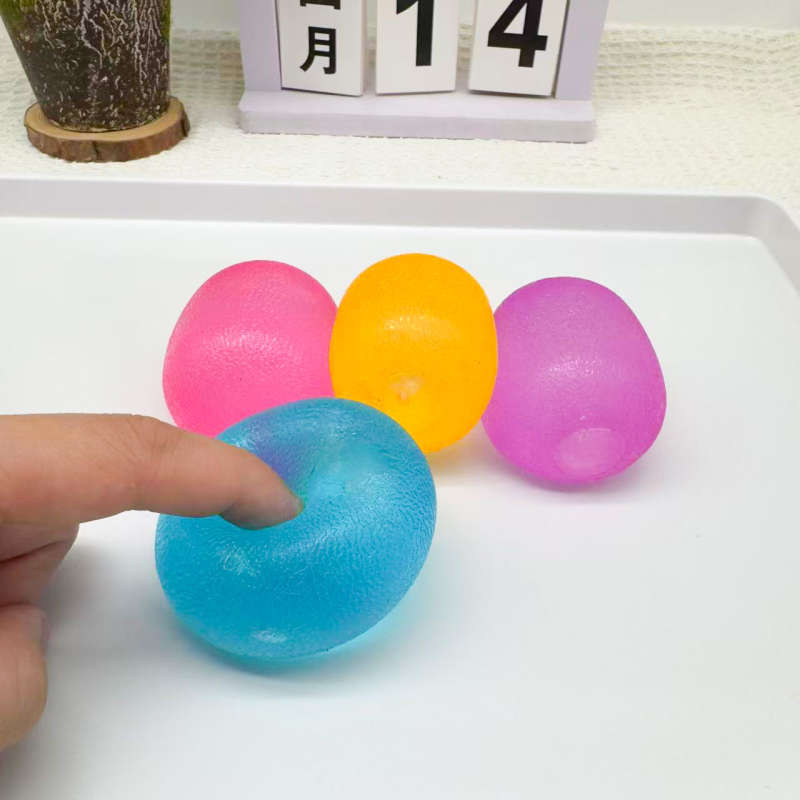
Quiet, compact and within reach: the desk-side format corporate buyers ask for.
What procurement teams actually specify
B2B buyers are not ordering the loudest, brightest toy. The 2026 adult/minimal OEM brief is explicit: silent operation, neutral palettes (black, grey, silver, dark green), no childish styling, long-term durability and a small visual footprint. A wholesale guide from thingswootoys adds a practical checklist — a range of tactile textures (squishy, clicky, magnetic, weighted), food-grade silicone and durable plastics, pocket or keychain formats, and retail-safe packaging. Hong Kong's Times Gift buying guide makes the office constraint plain: products for workspaces should be quiet and non-disruptive, while sound-and-light effects belong at home.
Customisation is where the margin sits. Corporate orders routinely ask for laser-engraved logos, brand-matched packaging, private moulds and custom colourways. Pop Boxss notes that HR and procurement teams favour onboarding kits, wellness boxes and recognition gifts because they are portable, shippable and easy to distribute across hybrid teams. Compliance travels with the order too: material declarations and safety documentation are now part of the standard buyer checklist, not an afterthought.
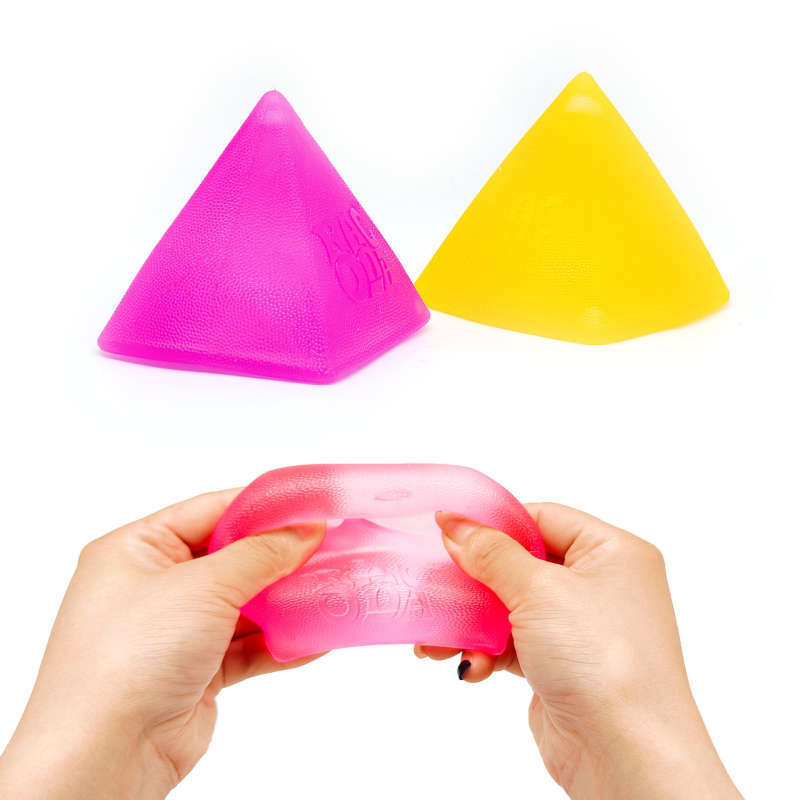
Slow-rise TPR construction — a repeatable, silent squeeze motion suited to shared offices.
A structural order book, not a passing fad
Consumer demand spikes and fades with a video or a holiday. Corporate demand behaves differently: budgets are annual, specifications are locked in advance, and reorders follow headcount rather than hashtags. An employee who adopts a daily fidget ritual becomes a repeat user; an HR department that puts a squeeze toy into every onboarding pack becomes a scheduled reorder account. The supply chain is already tooled for it — a 1688 survey of decompression-toy suppliers in Jinhua, Zhejiang found 7 of 10 can handle OEM/ODM, with MOQs as low as 500 pieces and samples in around seven days.
One honest boundary is worth keeping. As our earlier coverage of the clinical evidence noted, a squeeze toy is a low-cost self-regulation aid, not a treatment. Corporate wellness programmes work best when they frame it that way: a small, optional tool, never a substitute for professional mental-health care.
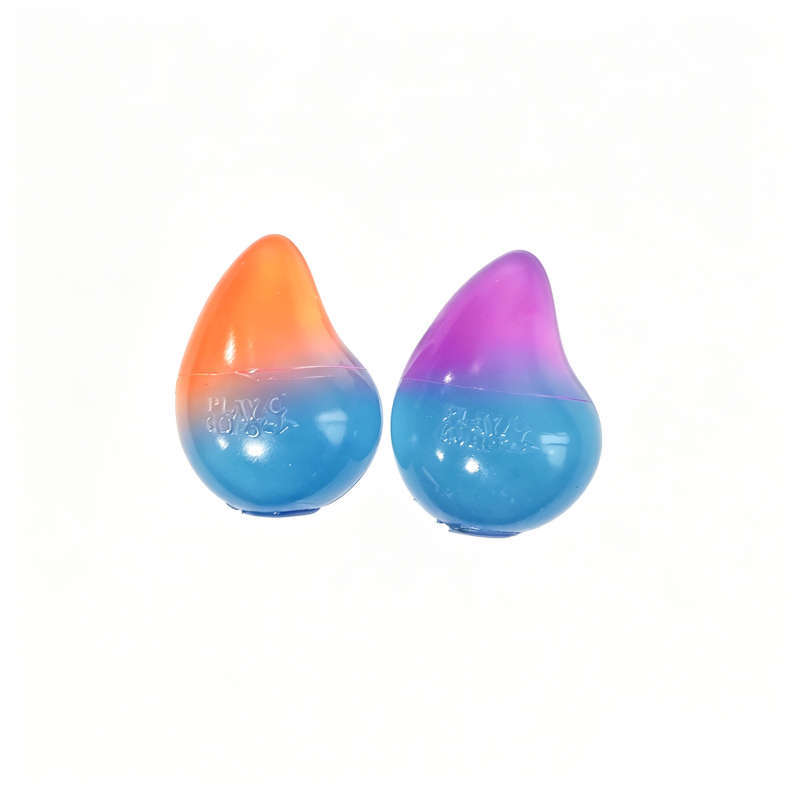
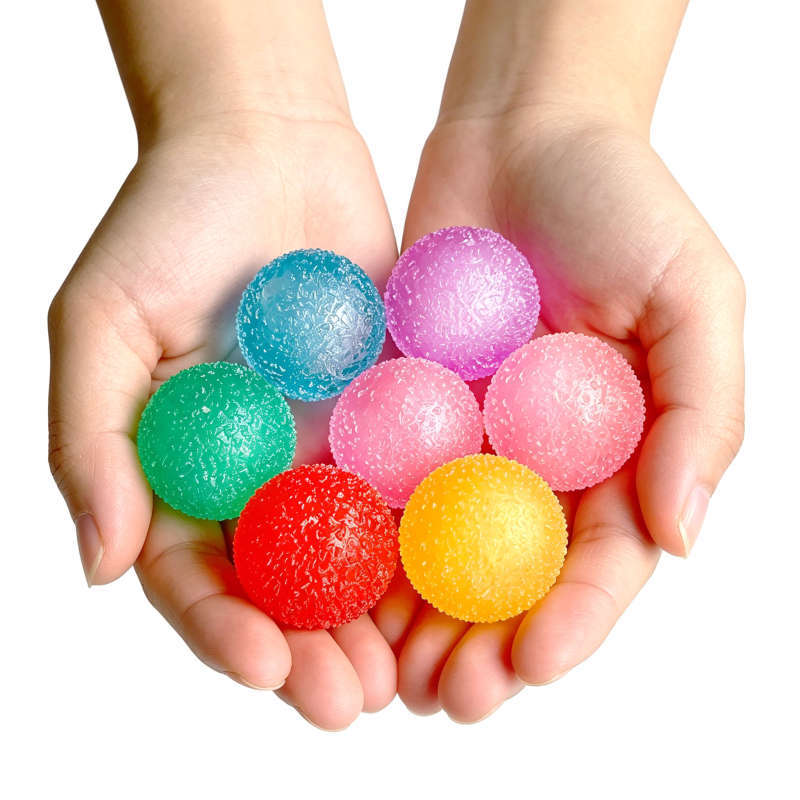
Palm-sized, pocketable and brandable — a format that travels from desk to commute.
What this means for Playgoro
Playgoro is set up for exactly this buyer: toy-grade TPR skins with a controlled ~8-second slow rise, flour or maltose fills, custom sculpting and private moulds, logo and packaging customisation, and small trial runs that scale to carton-level delivery. We pair that with the documentation B2B buyers now demand — China's GB 6675.14-2025, U.S. CPSC / ASTM F963, EU EN71 / REACH — plus material declarations and batch test reports, and the eco-material and packaging options that 78% of buyers now screen for. Where the Christmas rush is a seasonal window, the corporate wellness line is a year-round reorder account. The next growth lane is not a louder toy; it is a quieter purchasing department.
Sources: China Trade News (2026 Shenzhen Gifts Fair workplace-care procurement trend; 78% buyer survey); 1688 Encyclopedia (Mental Health Stress Toy Bulk Purchasing Guide; workplace fast-moving-consumer trend note, June 2026); ToyOEM (Adult Minimal Focus Anti-Stress Toys OEM for Professionals, 2026); thingswootoys (The Sensory Shift, 2026); Pop Boxss (Miniature Therapy / corporate wellness); SWITTS (Desk toys for corporate gifting, April 16, 2026); Times Gift Hong Kong (2026 stress-relief gift market); Playgoro (Custom Squishy Toys: B2B Sourcing Guide).
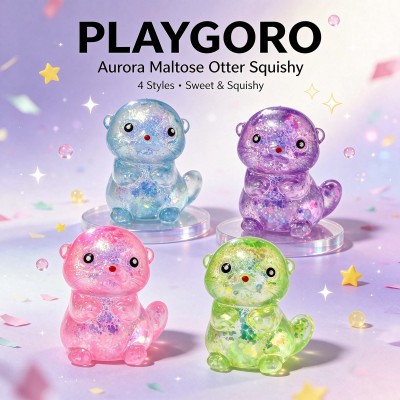
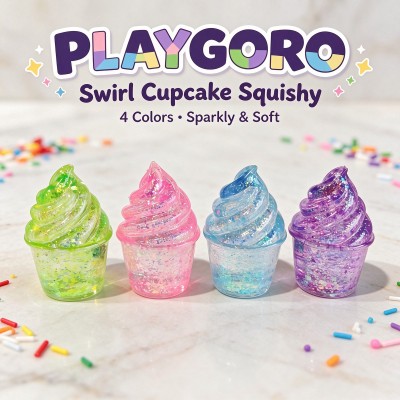
All four illustrations are Playgoro's own product photos from playgoro.com.